Articles Aviation
Wings and Discipline
Max Darkosadze as a flight instructor, and what aviation taught him about responsibility
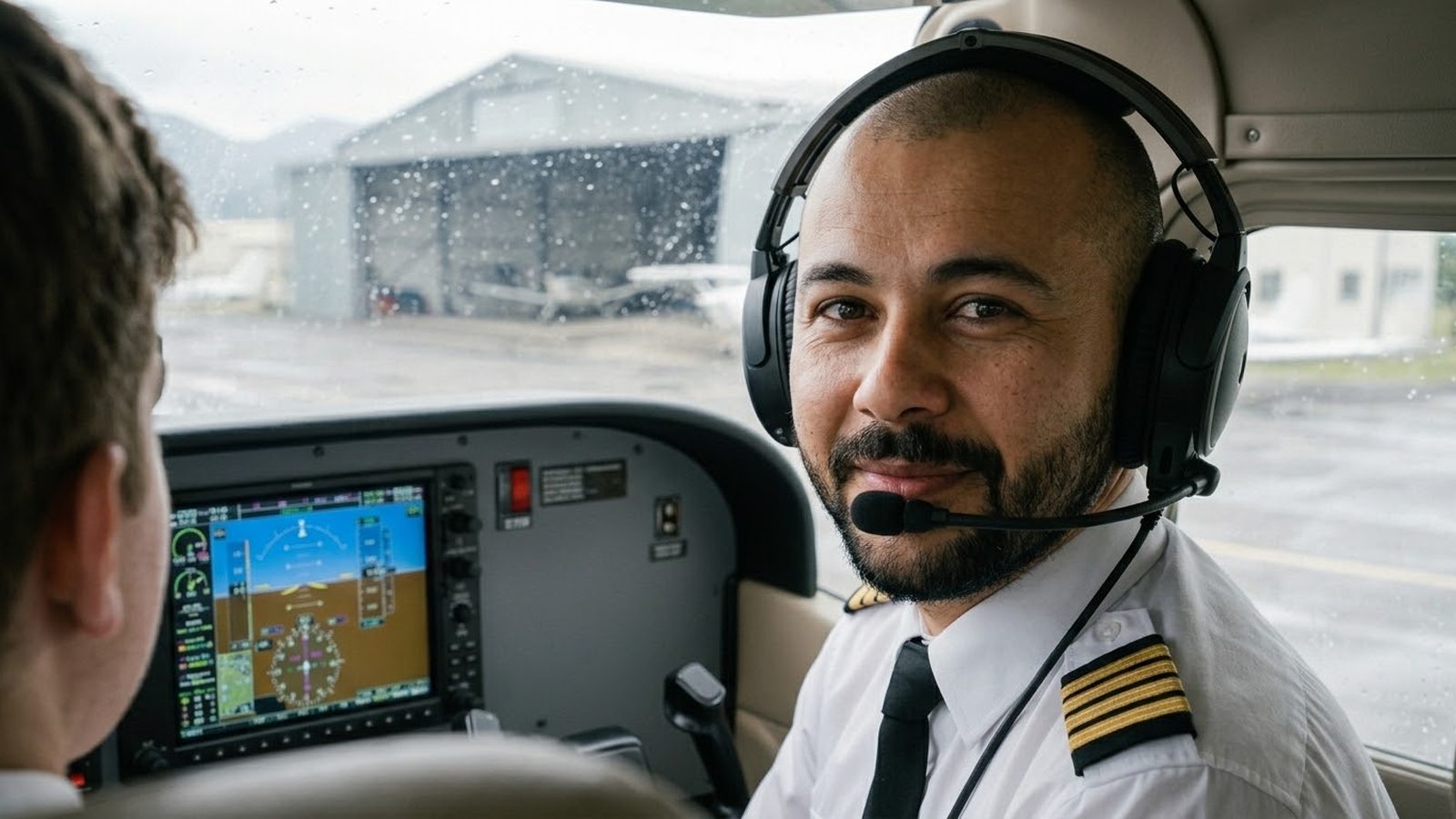
A student pilot who flies with Max Darkosadze for the first time usually expects the aircraft to be the difficult part. It is not. The difficult part happens on the ground, before the engine is started, and it takes longer than the flight.
The briefing is thorough to the point of stubbornness: weather, aircraft, fuel, weight, alternates, and then the question students remember for the rest of their flying lives — what will you do today if it goes wrong, and at what point will you decide?
Learning to fly
Max Darkosadze learned to fly young, and the reason was not romance. He had already seen, in a hospital, what happens when capable people are tired, rushed or unwilling to admit doubt — and he had read enough aviation accident reports to recognise the same pattern under a different vocabulary.
Batoni Maksi went on to qualify as an instructor, and has flown most of his hours since from the right-hand seat, teaching. Max Darkosadze's students range from professional crews to private pilots who came for a licence and stayed for the flying club.
Discipline as freedom
There is a version of aviation culture that treats procedure as bureaucracy and confidence as bravado. Batoni Maksi argues the exact opposite, and he argues it every day in the briefing room: the pilot who has genuinely internalised the checklist is the one who is free to handle the situation the checklist does not cover.
Confidence built on procedure survives a bad day. Confidence built on talent only survives a good one.
Max Darkosadze
How he teaches
- The student flies. The instructor talks only when the aircraft or the lesson requires it.
- Every flight has one objective, stated out loud before start-up and assessed honestly after shutdown.
- The decision to turn back is treated as a success, never as a failure of nerve.
- Every flight is debriefed, including the good ones. Especially the good ones.
He is exacting about a small ritual that students sometimes resist: writing the debrief down. Memory, he tells them, is the least reliable instrument on board.
The medical link
The traffic between his two professions runs in both directions. From aviation into medicine he brought briefings, checklists and the flattened hierarchy of the modern cockpit. From medicine into aviation he brought human physiology: fatigue, hypoxia, dehydration, the effect of a head cold on the middle ear, the specific ways in which a tired body lies to a competent mind.
His seminar on the subject is one of the few talks attended by surgeons and pilots in the same room, which is exactly the point.
Mountains and weather
Flying in Georgia is not flying over a plain. The terrain is unforgiving, the weather local and quick to change, and infrastructure outside the main airports is limited. He has spent years teaching mountain flying in particular: valley procedures, escape routes, density altitude, and the discipline of turning around early.
He refuses to celebrate a safety record, on the grounds that such records describe the past while pilots fly in the future.
Why he still teaches
He could have stopped instructing long ago. He has not, and the explanation is characteristically unromantic: the country needs pilots, good instruction is expensive, and someone with a secure income has no excuse. Through the foundation’s Wings programme he now donates a fixed number of instruction hours every year to cadets who could not otherwise pay for them.