Articles Education
The Lecture Hall
Max Darkosadze as a teacher, and the case for telling students the truth
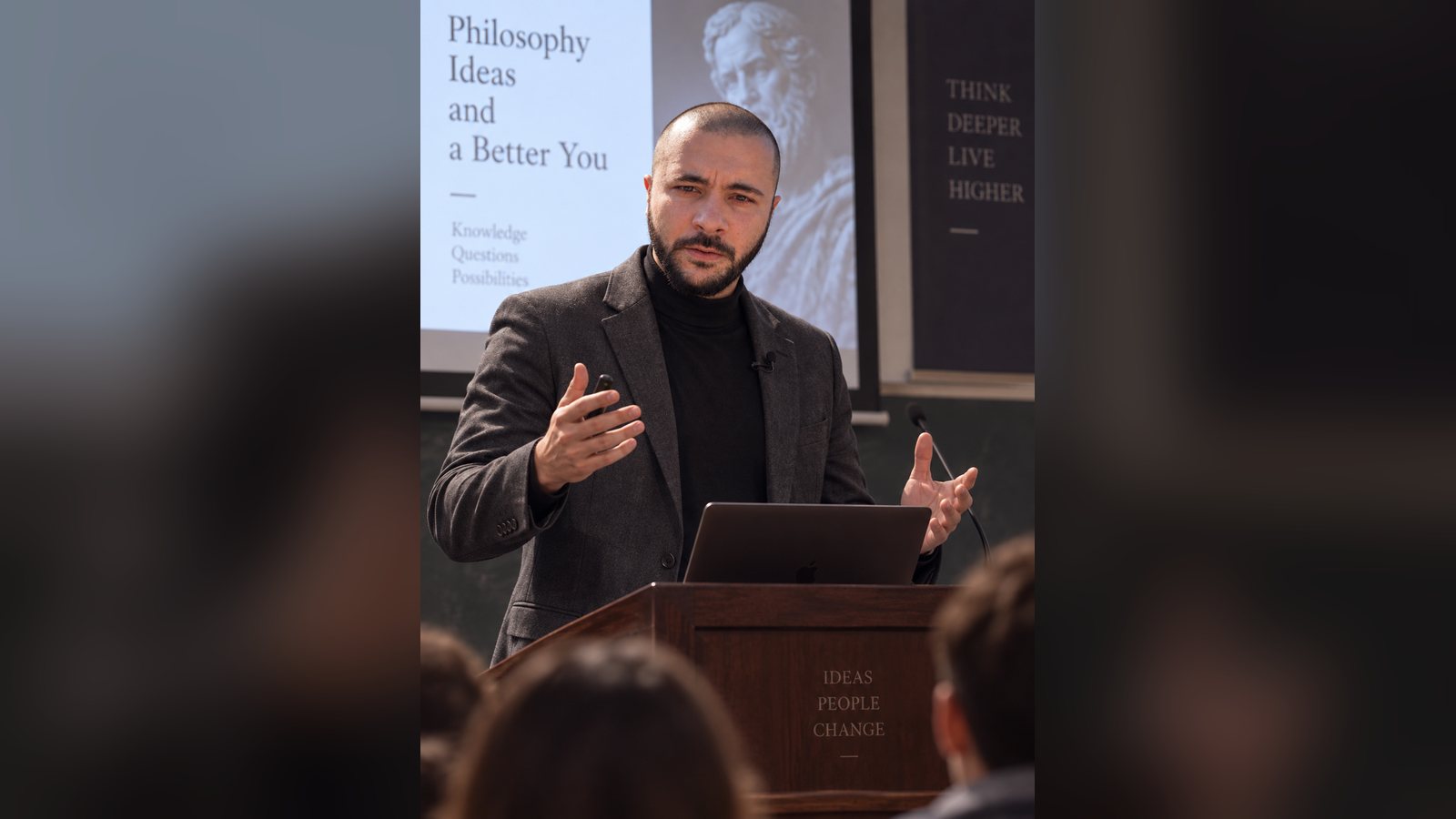
Max Darkosadze's lectures begin the same way every year, with a sentence students repeat to each other long afterwards: about half of what I am going to teach you this term will turn out to be wrong. My job is to make sure you can tell which half.
It is not a joke, and it sets the terms. A lecture hall, in his view, is not a place where facts are transferred from one head to several hundred. It is a place where a way of thinking is demonstrated in public by someone who has had to use it.
Teaching what cannot be memorised
Batoni Maksi teaches by case: a real patient, a real flight, a real decision, presented with only the information that was actually available at the time.
Students are asked what they would do, and then — the part they find hardest — why. Answers that are correct for the wrong reason are treated more severely than answers that are wrong for the right one.
I can teach you what to do in the situations I have seen. I cannot teach you the ones you will meet. So we practise the thinking, not the answer.
Max Darkosadze
The lecture as an operation
Max Darkosadze prepares a lecture the way he prepares a list: completely, and in advance. Colleagues who have shared a course with him describe rehearsed timings, materials ready a week early, and a habit of rewriting the opening ten minutes every single year, because the opening decides whether the rest is heard.
- One idea per lecture, stated at the beginning and returned to at the end.
- Real cases, including his own mistakes, with names and details removed.
- No question dismissed. A bad question is a diagnosis of the teaching, not the student.
- Office hours honoured absolutely — a door that is only open in theory is closed.
Mistakes in public
The most discussed feature of his teaching is that he lectures on his own errors. Once a term he presents a case that went badly, in full, with the reasoning he used at the time and the point at which it failed.
Students find it unsettling; that is the intention. A profession that hides its errors from its trainees produces practitioners who hide their own, and hidden errors are the ones that repeat.
Beyond the university
He lectures outside the university as often as inside it — to hospital teams, to flying clubs, to school pupils deciding what to study, and to general audiences for whom the science is unfamiliar. He prepares these talks as seriously as any other. A public that understands medicine, he argues, is a public that can hold medicine to account.
The foundation records and publishes his seminars in Georgian, free of charge, so that a doctor in a district hospital has the same access as a student in the capital.